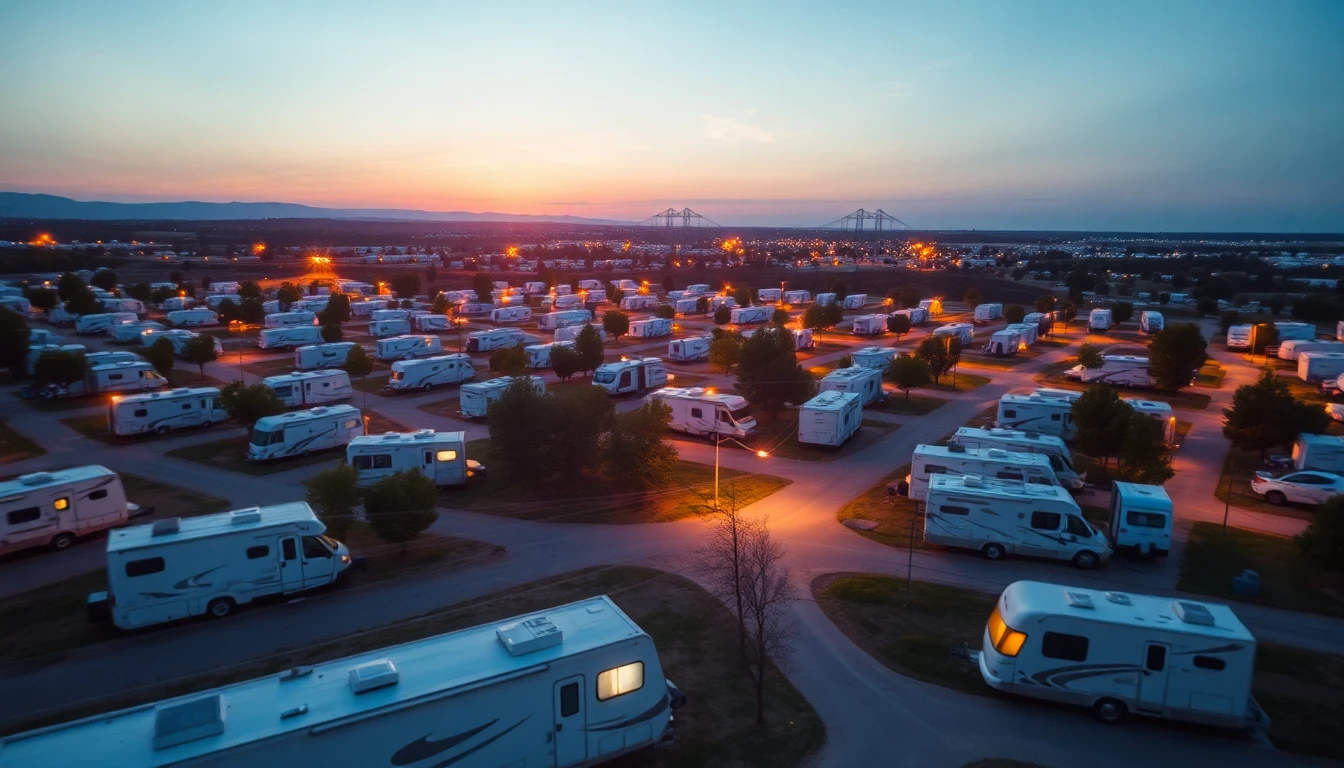
A 100-site campground with a $70,000 annual electric bill that only recovers $17,500 from guests is not running a hospitality business. It is running a charity for RV air conditioners.
That example — documented by Wild Energy, a campground metering provider — is not an outlier. It is the norm. The outdoor hospitality industry has spent decades absorbing electricity costs that were either bundled invisibly into nightly rates or manually metered with error-prone mechanical pedestal readers. Neither approach works when the average RV consumes 20 kWh per day (comparable to a small apartment, according to the Campground Consulting Group), a Class A motorhome with three AC units can hit 65 kWh or more on a summer day, and electricity rates nationally now average 16 to 17 cents per kWh with some states exceeding 25 cents.
The U.S. camping market reached $27.87 billion in revenue in 2025, according to Statista, with KOA reporting 11 million new camping households since 2019. Growth is real. But so is the cost pressure: wholesale electricity prices rose through 2025 driven by higher natural gas costs, according to the U.S. Energy Information Administration, and 2026 projections show continued increases in retail electricity rates. For campground owners, electricity is no longer a minor line item you can absorb. It is an operational cost that must be managed, measured, and recovered.
This guide breaks down how campground owners are tackling energy costs head-on — through per-site metering, smarter billing models, EV charger integration, and operational changes that cut expenses without damaging the guest experience.
The traditional campground model bundles electricity into the nightly rate. A site costs $45 per night, $55 per night, whatever the market supports — and the power hookup is included. Simple for guests. Devastating for margins.
The problem is variance. A pop-up camper with a fan and a phone charger might use 3 kWh in a day. A 40-foot Class A motorhome running two air conditioners, a residential refrigerator, a washer-dryer combo, a microwave, and a TV uses 40 to 65 kWh. Under flat-rate pricing, both pay the same nightly rate.
At the national average of roughly 16 cents per kWh, that motorhome costs the campground $6.40 to $10.40 per day in electricity alone — just for one site. Multiply that across 30 or 50 full-hookup sites in July and August, and the math gets ugly fast. A 50-site campground running at 80% occupancy through a 90-day peak season absorbs roughly $23,000 to $37,000 in electricity costs for those sites alone. If the nightly rate was set assuming $2 to $3 in electric cost per site, the shortfall is significant.
The real killer is the trend line. RVs are getting larger. Amenities are increasing. Guests now bring space heaters, electric griddles, portable ice makers, and — increasingly — electric vehicles that need charging. The gap between what campgrounds pay for electricity and what they recover is widening every year.
Per-site metering solves the core problem: it measures exactly how much electricity each site consumes and bills the guest accordingly. The concept is not new — RV parks have used pedestal meters for decades — but the technology has fundamentally changed.
Traditional pedestal meters require manual reading. Staff walk the park, record numbers, calculate consumption, and figure out billing — often days after the guest has checked out. This creates labor costs, reading errors, and a checkout process that guests find clunky. Some parks using manual reads recovered only 25% of their actual electricity costs because readings were missed, delayed, or inaccurate.
Modern wireless metering eliminates every one of those problems. Revenue-grade sensors clamp onto existing electrical feeds at each site and transmit consumption data in real time — minute by minute — via LoRaWAN, cellular, or Wi-Fi networks. No manual reads. No mechanical displays to squint at. No checkout delays. The system knows exactly what Site 47 consumed during a three-night stay, down to the kilowatt-hour, before the guest disconnects their shore power cord.
Not all metering is created equal. For billing purposes, meters must meet ANSI C12.20 accuracy standards — specifically Class 0.5 or better, meaning measurements are accurate to within ±0.5% of the true value at full load. This is not a technicality. States that regulate campground submetering — Virginia, Vermont, and others — explicitly require revenue-grade accuracy for any usage-based billing. Meters that lack this certification expose operators to billing disputes and potential regulatory action.
Solutions like Vutility HotDrop deliver revenue-grade precision in a wireless, clamp-on form factor that installs in minutes per site. No conduit runs, no pedestal replacements, no electrician required for weeks of work.
Campground owners worry that metering will upset guests. The data suggests the opposite. Guests who conserve energy often pay less under metered billing than they would under a flat rate that subsidizes heavy users. A family in a travel trailer using 8 kWh per day pays roughly $1.30 in electricity at the national average — far less than the $5 to $8 per night that flat-rate parks effectively build into their site fees.
Transparency is the key. When guests can see their usage in real time — through a guest portal or even a QR code at the pedestal — complaints drop because the bill is no longer a mystery. Wild Energy found that parks implementing smart metering saw improved guest satisfaction and fewer disputes when they paired usage-based billing with guest-facing transparency tools.
Campgrounds are seasonal businesses operating on a commercial electric rate. That combination creates a specific financial problem: demand charges.
Most commercial electricity accounts include two components. The energy charge covers actual kWh consumption (what you used). The demand charge covers peak capacity (the highest load you drew during any 15-minute interval in the billing period). Demand charges can represent 30% to 70% of a commercial electric bill, and they are set by your single worst 15-minute peak — not your average usage.
For campgrounds, those peaks concentrate in predictable windows: Friday evenings when a full park plugs in and fires up air conditioners simultaneously, holiday weekends when occupancy hits 100%, and the first hot afternoon of the season when every RV AC unit kicks on at once. A 100-site campground where 80 sites draw 30-amp service (7.2 kW each) simultaneously creates a demand peak of 576 kW. At $10 to $15 per kW in demand charges — typical for many utilities — that single peak costs $5,760 to $8,640 on one month's bill.
Real-time metering does not just track kWh consumption. It tracks demand (kW) — the instantaneous load on the system. With this data, campground operators can:
A campground that reduces its peak demand by even 15% through monitoring and load management can save $1,000 to $3,000 per month during peak season — savings that go straight to the bottom line.
Electric vehicles are arriving at campgrounds. KOA has publicly committed to installing EV charging infrastructure across its network, calling it a priority for supporting evolving guest needs. Go RVing reports that at least 66 RV parks across the U.S. already offer some form of EV charging, with Kings River RV Resort in California pioneering site-level EV connections.
For campground owners, EV charging is simultaneously an opportunity and a risk. The opportunity: guests will pay for charging, and offering it is a competitive differentiator. The risk: EV chargers draw significant power, and without metering, that cost is invisible.
A Level 2 charger on a 240-volt, 40-amp circuit draws roughly 9.6 kW — comparable to a full 50-amp RV hookup. Charging a standard EV battery from 20% to 80% takes 4 to 8 hours and consumes 30 to 45 kWh. At 16 cents per kWh, that is $4.80 to $7.20 per charge — real cost that must come from somewhere.
If EV charging is bundled into the site fee (like traditional electric hookups), the campground absorbs it. If it is metered and billed separately, it becomes revenue-positive. The economics are clear: metered EV charging at even a modest markup ($0.25 to $0.35 per kWh, which is still far below public network rates of $0.40 to $0.60 per kWh) creates a new revenue stream while offering guests a discount compared to commercial charging networks.
Adding EV chargers to a campground electrical system requires capacity planning. Each Level 2 charger adds 7 to 10 kW of potential demand. Ten chargers at full draw add 70 to 100 kW to your peak — which directly impacts demand charges. Without metering to track when chargers are in use and what they contribute to peak demand, owners cannot make informed decisions about how many chargers to install, where to place them, or whether to implement managed charging that limits simultaneous usage.
The smart approach: meter each EV charging circuit independently, set up managed charging schedules that favor overnight hours (when campground demand is naturally lower), and price accordingly. Guests plug in at 9 PM, the car charges through low-demand overnight hours, and both the campground and the guest benefit from lower peak exposure.
Campground submetering is not a regulatory gray area — it is explicitly addressed in most states, though the rules vary significantly.
Virginia has detailed campground billing regulations under Title 20, requiring that campground operators using submeters charge guests only for actual kWh consumed at rates that do not exceed what the utility charges the campground. Vermont has specific campground submetering rules that address seasonal rate changes: when the utility switches from winter to summer rates, campgrounds must base their guest billing on the most recent utility rate period bill they have available.
The common threads across most state regulations:
These regulations actually favor campground owners who implement proper metering. By recovering actual electricity costs accurately and transparently, operators can lower their base site rates (making them more competitive on booking platforms), recover the electricity gap that flat-rate pricing was masking, and comply fully with state regulations that increasingly expect measured billing in commercial settings.
Metering alone does not reduce costs — it reveals where costs originate so operators can act. Here are the operational changes that campgrounds with real-time energy data consistently implement:
Bath houses, laundry rooms, rec halls, pools, and offices consume energy 24/7 — but occupancy in those spaces fluctuates dramatically. Monitoring common area circuits separately from site-level consumption lets operators schedule HVAC, lighting, and pool pumps around actual usage patterns. A heated bath house that runs all night for zero visitors is a cost that monitoring makes visible and scheduling makes fixable.
Aging electrical infrastructure — pedestals with corroded connections, undersized feeders, transformers approaching capacity — wastes energy and creates safety risks. Circuit-level monitoring catches anomalies: a pedestal drawing 20% more power than the RV plugged into it should require indicates a connection problem. Transformers running consistently above 80% capacity signal upgrade needs before failure forces emergency replacement mid-season.
Seasonal campgrounds power up everything at once on opening day and power down everything at close. Both events create demand spikes and equipment stress. Monitoring enables staged startup: bring on sections sequentially, verify each one is drawing normally, and spread the demand peak across hours rather than concentrating it in minutes. The same applies to seasonal shutdown — identifying circuits that should be fully de-energized versus those that need to maintain freeze protection or security lighting through the off-season.
The math for campground metering is unusually straightforward because the unrecovered electricity costs are so large.
Take a 75-site campground operating 180 days per year at 70% average occupancy:
If the campground was recovering 25% of that through flat-rate pricing (a common scenario before metering), the annual gap is roughly $22,700. Modern wireless metering systems for a 75-site park typically cost $15,000 to $30,000 installed, depending on the technology and site infrastructure — meaning payback within one to two seasons even before accounting for demand charge reductions and operational savings.
The comparison to traditional pedestal meter replacement is even more favorable. Replacing 75 mechanical pedestal meters at $800 to $1,500 per pedestal runs $60,000 to $112,000 — four to six times the cost of clamp-on wireless sensors that deliver better data, real-time visibility, and revenue-grade accuracy without excavation or conduit work.
If you are a campground owner reading this before your peak season, here is a practical starting point:
Electricity is no longer a cost you can hide in the nightly rate. The campgrounds that measure, manage, and recover their energy costs will maintain healthier margins. The ones that keep absorbing it will watch their profitability erode every year as rates climb and RVs get bigger.
See how Vutility wireless energy monitoring helps campground operators track per-site consumption, manage demand, and recover electricity costs — all with revenue-grade accuracy and zero manual meter reading.