In a 120,000-square-foot medical office complex outside of Charlotte, the facilities team spent three years allocating utility costs to tenants using a simple pro-rata formula: each practice paid a share of the building's electricity bill proportional to their leased square footage.
It seemed fair. It was not.
When the building owner installed circuit-level submeters on each tenant's distribution panel, the data told a different story. An orthopedic practice occupying 8% of the building's floor area was consuming 19% of its electricity — driven by imaging equipment, sterilization autoclaves, and a server room running 24/7. Meanwhile, a behavioral health tenant in a similar-sized suite was using less than 3% of total building electricity. Under the square-footage model, the behavioral health practice had been subsidizing the orthopedic group by approximately $1,400 per month for three years.
The building owner corrected the billing. Within six months, overall building energy consumption dropped 14% — not because of any equipment upgrade, but because tenants who could finally see their actual consumption started managing it.
This is the core argument for submetering: it makes the invisible visible, and visibility changes behavior.
The U.S. Energy Information Administration's 2018 Commercial Buildings Energy Consumption Survey — the most comprehensive dataset available — reports that 5.9 million commercial buildings in the United States spent $141 billion on energy annually. The U.S. Department of Energy estimates that approximately 30% of that energy is wasted (DOE, 2011).
That is roughly $42 billion per year in energy spending that produces no useful outcome — no heating, no cooling, no lighting, no computing. It runs equipment that should not be running, lights spaces that are unoccupied, and heats air that is simultaneously being cooled.
The waste persists not because building operators are negligent but because they lack the data resolution to find it. A whole-building utility meter tells you what you spent. A submeter — particularly one monitoring individual circuits — tells you where you spent it and why.
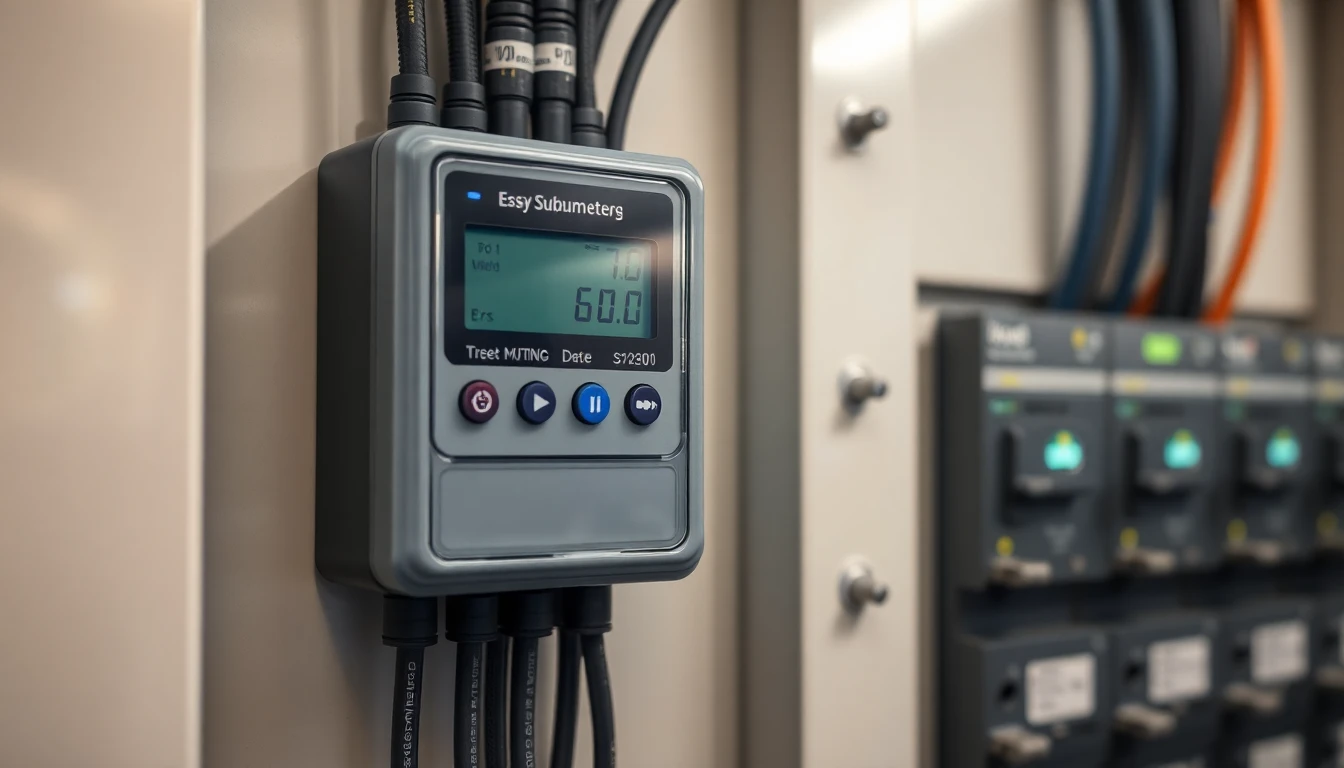
Submetering refers to installing metering devices downstream of the utility's primary meter to measure energy consumption at more granular levels: by floor, by tenant, by mechanical system, or by individual circuit.
The granularity matters. There is a significant operational difference between knowing that your building consumed 85,000 kWh last month and knowing that your third-floor air handling unit consumed 12,400 kWh — 22% more than the identical unit on the second floor serving the same load profile.
Not all submetering is equal. The value increases with granularity:
The DOE's Becoming Smarter About Energy submetering guide notes that circuit-level monitoring provides the quickest payback among all forms of energy conservation measures — often recovering installation costs within months rather than years.
The value of submetering is not abstract. It breaks into five distinct, quantifiable business cases that facility managers, property owners, and energy managers can evaluate independently.
The most straightforward business case: charge tenants for the energy they actually use.
In multi-tenant commercial buildings, energy costs are typically allocated through one of three methods: inclusion in base rent (tenants pay nothing directly), pro-rata allocation based on square footage, or direct metering. The first two methods share a fundamental problem — they decouple consumption from cost.
When a tenant's electricity bill does not change based on how much electricity they use, they have zero financial incentive to manage consumption. Space heaters under every desk, lights on all weekend, servers running in closets with no airflow management — none of these behaviors cost the tenant anything additional.
Research documented by the DOE's Better Buildings program has consistently shown that giving tenants visibility into their individual energy use — and billing them accordingly — reduces consumption by 15–25%. A multi-tenant office building spending $300,000 annually on electricity could see $45,000–$75,000 in annual savings from tenant behavioral change alone.
Beyond savings, accurate tenant billing eliminates disputes. When a tenant questions their allocation, the submeter data provides a definitive answer. No estimates, no arguments, no renegotiation — just measured consumption.
Circuit-level monitoring turns energy data into a maintenance tool.
Every piece of electrical equipment has a normal operating signature — a pattern of power draw that corresponds to its design condition. A properly functioning 10-ton rooftop unit draws a predictable amount of power at a given outdoor temperature. When that draw starts creeping upward — 5% this month, 8% next month — something is changing. Compressor efficiency is declining. A fan bearing is failing. Refrigerant charge is low.
Monthly utility bills absorb these gradual changes into the total, where they are invisible against normal seasonal variation. Circuit-level monitoring catches them within days.
The economics of early detection are compelling. The U.S. DOE's Pacific Northwest National Laboratory estimates that proactive maintenance enabled by continuous monitoring can reduce repair costs by 25–30% compared to reactive (run-to-failure) maintenance. Beyond direct repair savings, equipment operating outside its design envelope wastes energy — often 10–30% more than a properly maintained unit.
For a building with $200,000 in annual HVAC energy costs, catching a compressor degradation early enough to clean coils and adjust refrigerant charge (a $500 service call) instead of replacing a burned-out compressor ($8,000–$15,000) is not marginal. It is the difference between a maintenance budget that works and one that does not.
In energy management, a "leak" is not always water dripping from a pipe. It is any energy consumption that serves no purpose — and it hides in plain sight.
Common energy leaks that submetering exposes:
Circuit-level monitoring makes each of these patterns visible as distinct signatures in the load data. An air handler drawing 15 kW at 3:00 AM on a Sunday when the building's occupancy schedule says "unoccupied" is an immediate, actionable finding. Without the circuit-level data, that 15 kW is absorbed into the monthly total and invisible.
Demand response programs pay building operators to reduce electricity consumption during grid stress events. These programs represent real revenue — not just cost avoidance — and submetering is the prerequisite for meaningful participation.
According to FERC's December 2024 Annual Assessment of Demand Response, commercial demand response enrollment has grown steadily as utilities seek alternatives to building new generation capacity. Programs like Austin Energy's Commercial Demand Response pay $50–$80 per kW of verified load reduction during events — up to $76,000 annually per facility. Southern California Edison's Emergency Load Reduction Program pays $2 per kWh reduced during grid emergencies.
But participation requires two capabilities that only submetering provides:
A 200,000-square-foot commercial building with circuit-level monitoring can identify 50–150 kW of sheddable load (lighting reductions, HVAC setpoint adjustments, non-critical equipment shutdown) and verify the reduction with circuit-level data. At $60/kW, that is $3,000–$9,000 per event, with typical programs calling 10–20 events per year.
ESG (Environmental, Social, and Governance) reporting has evolved from voluntary disclosure to regulatory requirement in many jurisdictions. New York City's Local Law 97, the EU's Corporate Sustainability Reporting Directive (CSRD), the SEC's climate disclosure rules, and California's SB 253 all require organizations to report Scope 1 and Scope 2 greenhouse gas emissions — and for most commercial buildings, electricity consumption is the primary driver of Scope 2 emissions.
The challenge is not whether to report, but how accurately.
The EPA's ENERGY STAR Portfolio Manager — the most widely used building benchmarking tool in the U.S. — accepts whole-building utility data. But investors, auditors, and increasingly regulators want more. They want to know which building systems drive emissions, how emissions intensity changes year-over-year by end use, and whether reported reductions reflect actual operational changes or just weather variation.
Circuit-level submetering provides the granular data that credible ESG reporting demands:
For organizations subject to NYC LL97, the stakes are financial. Buildings exceeding their emissions caps face penalties of $268 per metric ton of CO2 over the limit. A 300,000-square-foot office building that exceeds its 2024 cap by 500 metric tons faces $134,000 in annual penalties. Submetering provides the data to identify where to cut emissions most cost-effectively — and to prove compliance.
The business case for submetering is not theoretical. Here is a representative calculation for a 150,000-square-foot multi-tenant office building spending $250,000 annually on electricity.
Even at the conservative end, the system pays for itself in the first three to six months. The DOE's submetering guide confirms this range, noting that submetering consistently delivers the fastest payback among energy conservation measures.
If the ROI is this clear, why do most commercial buildings still operate without circuit-level visibility?
Three structural barriers explain the gap:
Legacy cost assumptions. Traditional hardwired submetering systems required dedicated current transformers, communication cabling, and BMS integration — costing $500–$1,000+ per monitoring point. Modern wireless solutions have reduced this by 60–80%. Clamp-on sensors that harvest energy from the circuits they monitor — like Vutility's HotDrop — install in minutes without electricians, panel shutdowns, or communication wiring.
Split incentives. In leased commercial space, the building owner invests in monitoring infrastructure while tenants benefit from lower operating costs. Unless lease structures align these incentives — through green lease provisions, direct energy billing, or operating expense pass-throughs — neither party acts.
Data overwhelm. Circuit-level monitoring generates millions of data points per month. Without the right analytics platform, the data creates noise rather than insight. The monitoring system must translate raw measurements into actionable findings — equipment running after hours, loads exceeding baselines, peak demand approaching thresholds — not just display charts.
Submetering does not require monitoring every circuit on day one. A phased approach lets you capture the highest-value insights first:
Phase 1: Major mechanical systems. Monitor chillers, air handlers, boilers, and main distribution panels. This covers 60–80% of building energy consumption with 8–15 monitoring points. Cost: $3,000–$8,000. Payback: weeks to months.
Phase 2: Tenant and zone distribution. Add monitoring at tenant distribution panels for billing accuracy and zone-level analysis. This enables fair cost allocation and identifies which areas of the building over- or under-consume. Cost: $5,000–$15,000 for 15–25 additional points.
Phase 3: Full circuit-level coverage. Extend monitoring to individual circuits for complete fault detection, phantom load identification, and equipment-level diagnostics. This is the level that catches stuck dampers, degrading compressors, and phantom loads before they become expensive problems.
Each phase delivers standalone value. Phase 1 alone typically identifies enough scheduling waste and demand management opportunities to fund Phase 2.
Submetering is not an energy efficiency technology. It is a visibility technology. It does not save energy by itself — it shows you where energy is being wasted so you can stop wasting it.
The business case rests on five pillars that apply to virtually every commercial building over 50,000 square feet: accurate tenant billing, early fault detection, waste elimination, demand response revenue, and ESG compliance. Each pillar delivers independent, measurable value. Together, they represent a 20–35% reduction in energy costs for most buildings.
The question is not whether circuit-level visibility pays for itself. The DOE, EPA, and two decades of field data have settled that question. The question is how much your building is spending on waste you cannot see.
Ready to see what your building's circuits reveal? Contact Vutility to learn how HotDrop wireless energy monitors deliver circuit-level visibility with clamp-on installation and zero battery maintenance.