In March 2025, a property management firm in Chicago received the February electricity bill for a 180,000-square-foot office building they operated. The bill showed a total of $31,400 — about $2,000 higher than the same month the previous year. The building manager noted the increase, flagged it as weather-related, and paid the bill.
Three months later, the same firm installed circuit-level energy monitoring across the building's electrical panels. Within the first week of data collection, the monitoring system revealed something the monthly bills had been hiding: a 45-kW rooftop air handling unit was running 24 hours a day, seven days a week — including weekends and holidays when the building was unoccupied. The unit's BMS scheduling had been overridden during a maintenance event in January and never restored.
That single stuck schedule was costing the building approximately $1,200 per month in wasted energy. Over the five months between the override and the detection, it had consumed roughly $6,000 in unnecessary electricity. The fix took 90 seconds — a BMS schedule correction.
This is not an unusual story. It is the predictable outcome of managing building energy with monthly resolution data in a world that operates in real time.
A monthly utility bill and a real-time metering system both measure the same thing: how much electricity your building consumed. But they measure it at such different resolutions that they produce fundamentally different types of insight.
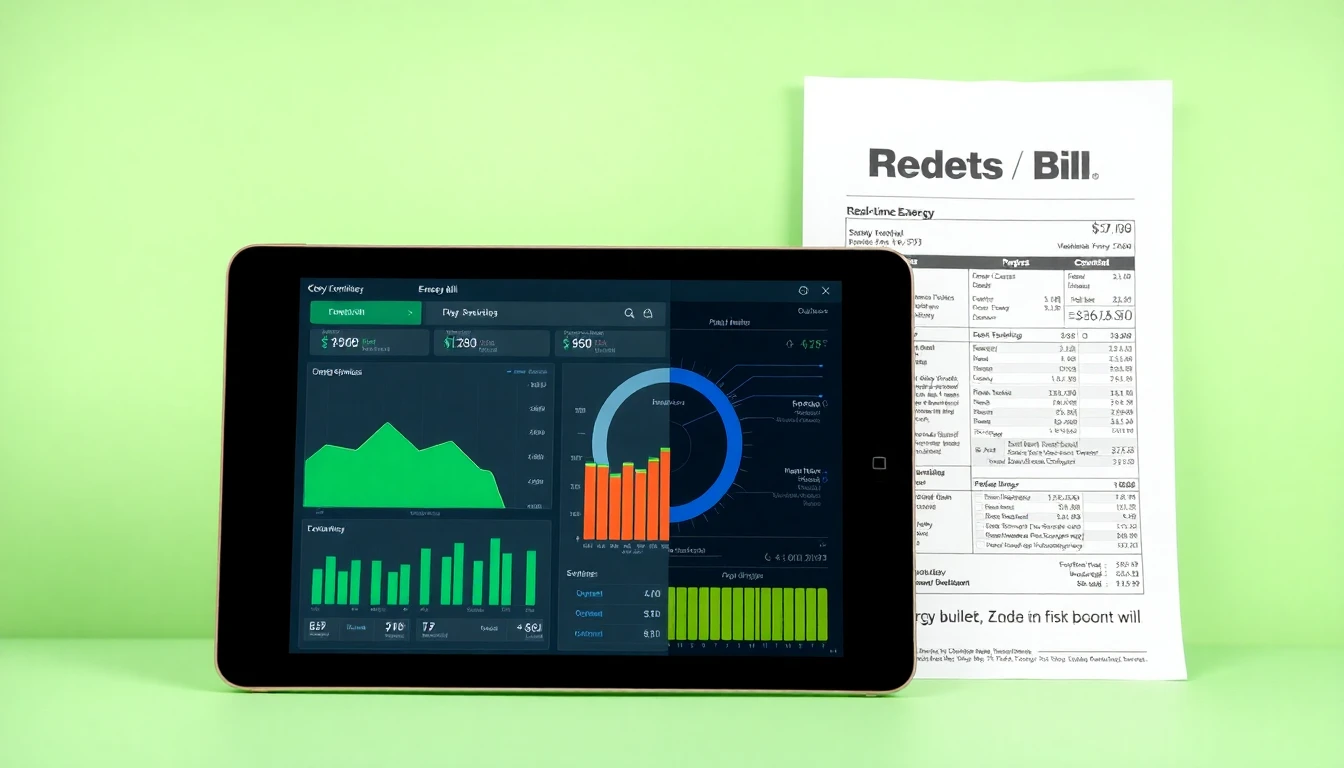
Think of it this way: a monthly bill is a photograph. Real-time metering is a video. Both show you the building, but only one shows you what is actually happening.
A standard commercial electricity bill provides:
That is it. One data point for total consumption. One data point for peak demand. One total cost. For an entire month of building operations.
A real-time energy monitoring system collecting data at 1-minute intervals generates approximately 43,200 data points per circuit per month. For a building with 50 monitored circuits, that is over 2.1 million readings per month — compared to the 2 or 3 numbers on the utility bill.
At this resolution, you can see:
The gap between these two data sets is not incremental. It is the difference between knowing you spent too much and knowing why.
Demand charges are the most misunderstood and most expensive line item on most commercial electricity bills. They deserve a dedicated examination because they illustrate perfectly why monthly data resolution fails building operators.
Your utility measures your building's power draw continuously and records the highest 15-minute average during each billing period. That single peak — even if it lasts for only 15 minutes out of 43,200 minutes in a month — sets your demand charge for the entire billing cycle.
Demand charges typically range from $8 to $25+ per kW depending on your utility and rate class. According to industry data from Setra Systems, demand charges can represent 30–70% of a commercial electricity bill. For a building with a 400 kW peak demand at $15/kW, that is $6,000 per month in demand charges alone — potentially more than half of the total bill.
Your monthly bill tells you the peak demand value (e.g., 412 kW) and the resulting charge ($6,180 at $15/kW). It does not tell you:
Without this information, reducing demand charges is guesswork. You know the number is too high but have no way to determine which operational changes would lower it.
With minute-level monitoring, the picture changes entirely. A facility team reviewing real-time data for the same building might discover that the 412 kW peak occurs every Monday morning between 6:45 and 7:00 AM, when the BMS simultaneously starts all four rooftop units, the parking garage lighting, the elevator systems, and the lobby HVAC — all recovering from weekend setback temperatures at the same time.
The fix: stagger equipment startup over a 30-minute window. Unit 1 starts at 6:30, Unit 2 at 6:40, Unit 3 at 6:50, Unit 4 at 7:00. The building reaches the same comfort conditions by 7:15 AM, but the peak demand drops from 412 kW to 340 kW — a 17% reduction. At $15/kW, that saves $1,080 per month or $12,960 per year. Zero capital investment. Just a scheduling change made possible by understanding when and why the peak occurs.
Beyond demand charges, monthly billing resolution creates blind spots across every aspect of building energy management. Here are five categories of waste that consistently hide inside monthly totals.
The U.S. Department of Energy estimates that 30% of energy consumed in commercial buildings is wasted. A significant portion of that waste occurs when equipment runs outside occupied hours — nights, weekends, and holidays.
A monthly bill cannot distinguish between energy consumed during business hours and energy consumed at 2:00 AM on a Sunday. Both are summed into the same kWh total. If your building's after-hours baseload is 40% of daytime consumption, your monthly bill will not flag this. It will simply show a total that looks "normal" because it is consistent month to month.
Real-time metering shows the overnight and weekend load profile clearly. A building that draws 200 kW during business hours and 120 kW at midnight has a baseload ratio of 60% — far higher than the 20–30% considered typical for a well-managed office building. That 30–40% excess baseload is equipment running without purpose, and it only becomes visible when you can see the load profile hour by hour.
Many commercial utility tariffs include a demand ratchet: your demand charge is based on the highest peak demand recorded in the previous 12 months, not just the current month. One bad peak in July — perhaps caused by a chiller compressor failure that forced a backup unit to run at full capacity alongside the primary — can inflate your demand charges for the following 11 months.
With monthly billing only, you might not even connect the elevated demand charges to that single July event. The bill just shows a higher demand charge line item, month after month. With real-time monitoring, you can see the spike, understand its cause, and take steps to prevent recurrence — potentially saving 12 months of inflated charges.
Equipment does not fail catastrophically and then run perfectly until the next catastrophic failure. It degrades gradually. A compressor losing efficiency draws 5% more power this month than last month. A cooling tower fan with a failing bearing draws 8% more. A variable frequency drive with a faulty sensor runs the pump at 75% speed instead of the 45% it should be running at given the current load.
Monthly bills absorb these changes into the total. A 5% increase in chiller energy consumption might add $300 to a monthly bill — invisible against normal weather-driven variation. Real-time monitoring at the circuit level catches the trend within days or weeks, enabling preventive maintenance before the gradual degradation becomes an expensive failure.
One of the most common energy waste patterns in commercial buildings is simultaneous heating and cooling — where one system is heating a zone while an adjacent system is cooling it, or where a reheat system is adding heat to air that was just mechanically cooled.
Monthly bills cannot reveal this because they report total energy consumption without system-level attribution. You see total electricity and total gas. You cannot see that $1,800 per month in gas consumption is being used to reheat air that just cost $2,200 in electricity to cool.
Circuit-level monitoring of both the cooling and heating systems reveals the pattern immediately through correlated load profiles — high cooling and high heating loads during the same hours indicate a system fighting itself.
In multi-tenant buildings, monthly billing to the building level gives no visibility into how individual tenants or zones consume energy. One tenant running space heaters on every desk while another has optimized their plug loads — both are invisible in the monthly total. The efficient tenant effectively subsidizes the wasteful one through shared operating expenses.
According to research cited by the U.S. DOE, giving tenants visibility into their individual energy use reduced consumption by 21%. But that visibility requires metering at the tenant or zone level, which monthly utility bills cannot provide.
To make this concrete, consider how the same building — a 150,000-square-foot Class A office in Denver — looks through each lens during a single month.
Total consumption: 187,500 kWh. Peak demand: 425 kW. Energy charge: $18,750 (at $0.10/kWh). Demand charge: $6,375 (at $15/kW). Total: $25,125. Compared to January of the prior year ($24,200), the building shows a 3.8% increase — easily attributed to a colder-than-average January.
No action taken. Bill paid. Filed.
The monitoring dashboard reveals a different story:
The real-time view identifies approximately $3,200/month in addressable waste:
Annualized, that is $38,400 in savings — from a month that the utility bill said was "only 3.8% worse than last year."
The cost difference between monthly billing (which you already receive for free) and real-time circuit-level monitoring is not trivial. Modern wireless monitoring systems typically cost $150–$400 per monitoring point for hardware, plus $100–$500/month for software platforms. A 50-point installation runs $10,000–$25,000 upfront plus annual platform costs.
But the math works overwhelmingly in favor of monitoring for any building spending more than $50,000 annually on electricity. If real-time data identifies even 10% in addressable waste — a conservative estimate given that the DOE puts average commercial building waste at 30% — the monitoring pays for itself within the first year.
The GSA and the DOE's Better Buildings program have documented that buildings with continuous monitoring achieve 15–30% energy reduction. At the low end of that range, a building spending $200,000 annually on energy saves $30,000 per year — enough to cover the cost of monitoring several times over.
If real-time metering is so clearly superior, why do most commercial buildings still rely on monthly bills as their primary energy management tool?
Three reasons:
Legacy infrastructure. Traditional submetering required hardwired current transformers, dedicated communication cabling, and BMS integration projects that cost $500–$1,000+ per monitoring point. At that price, widespread circuit-level monitoring was a luxury reserved for campuses and mission-critical facilities. Modern wireless solutions — like Vutility's HotDrop, which clamps onto conductors in minutes and harvests energy from the circuit it monitors — have reduced this barrier by 60–80%.
Organizational inertia. Facility managers have managed buildings with monthly bills for decades. The utilities are paid, the lights are on, and the building functions. The waste hidden inside those bills is invisible precisely because it is hidden — no one can see it, so no one asks about it.
Split incentives. In leased commercial space, the building owner often pays for the monitoring infrastructure while the tenant benefits from lower operating costs. Unless the lease structure aligns these incentives (through green lease provisions or direct utility billing), neither party is motivated to invest in better data.
Moving from monthly billing to real-time metering does not require replacing your utility meter or disrupting building operations. Modern monitoring systems operate in parallel with existing electrical infrastructure.
A practical approach:
Each phase delivers incremental insight and incremental savings. Phase 1 alone is typically sufficient to identify the scheduling and demand management opportunities that represent the fastest payback.
Monthly utility bills were designed for billing. They do that job well. But they were never designed for energy management, and using them as your primary energy management tool is like using a bathroom scale to diagnose a medical condition — it tells you something is wrong, but not what, not where, and not how to fix it.
Real-time metering closes that gap. It transforms energy from an uncontrollable cost center into a measurable, manageable operational parameter — no different from indoor air quality, fire detection, or access control.
The question is not whether real-time data is better than monthly bills. It obviously is. The question is how much money your building is leaving on the table every month while you wait for the next bill to arrive.
Want to see what your building looks like at one-minute resolution? Contact Vutility to learn how HotDrop circuit-level monitoring delivers real-time energy visibility with clamp-on installation and zero battery maintenance.